


China Personal Protective Equipment Expo | Core Essentials for Selecting Geological Disaster Rescue Protective Equipment
China Personal Protective Equipment Expo recognizes that against the backdrop of increasingly frequent extreme weather events, emergency protective equipment for geological disasters such as mountain collapses has become a focal point of industry attention.
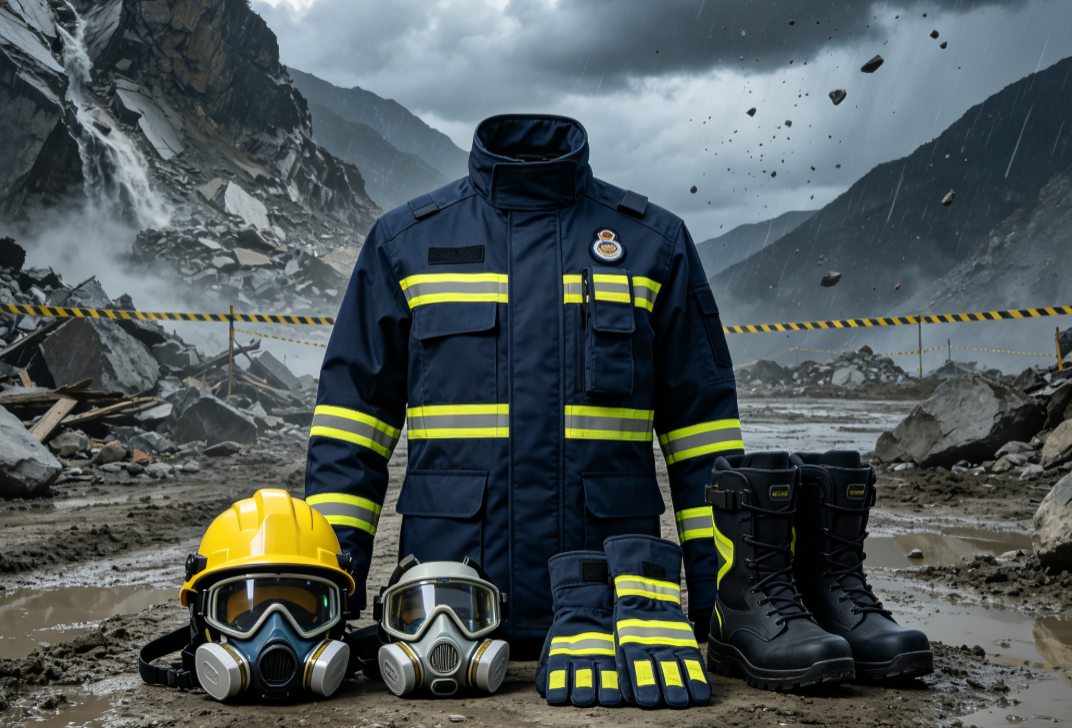
Disaster rescue sites feature complex environments where secondary risks such as repeated collapses are omnipresent. The personal safety of frontline workers is highly dependent on properly matched personal protective equipment. Scientific selection of compliant protective products is an essential prerequisite for safely conducting emergency rescue operations.
The most immediate threats at mountain collapse sites are rolling rocks and flying debris. To avoid head and eye injuries, professional rescue helmets meeting impact resistance standards must be selected, paired with safety goggles to block dust and gravel from entering the eyes. During debris clearance operations, rock faces and construction waste edges are sharp, requiring torso protective clothing that balances abrasion resistance and puncture protection to prevent body surfaces from being cut or torn by sharp objects.
Disaster sites continuously generate large amounts of dust, and prolonged inhalation can damage the respiratory tract. Dust-protection respiratory equipment is a mandatory configuration. If encountering rainfall, muddy water, or accumulated water conditions, full emergency protective suits can isolate mud, water, and on-site harmful contaminants, maintain stable body temperature, and reduce the probability of infection caused by skin contact with pollution sources.
Debris handling and miscellaneous cleanup operations cause extreme wear on hands and feet. Feet require rescue boots equipped with both anti-impact and anti-puncture functions to withstand falling object impacts and cuts from sharp hard objects on the ground. Hands require protective gloves with strong friction, abrasion resistance, and tear resistance, which can both improve operational precision and reduce hand injuries from prolonged friction.
For various production and business units, even if not participating in external large-scale geological emergency rescue, factories located in flood season or geological disaster-prone areas should establish internal flood prevention emergency teams and stock sufficient quantities of complete protective supplies. Establishing clear and complete emergency equipment inventories, regularly inspecting and maintaining various protective products, and ensuring equipment functions remain intact are foundational measures for safeguarding employee safety during sudden emergencies.
When enterprises procure emergency protective equipment, the core is to control two major standards: product compliance and scenario adaptability. Different emergency rescue operation scenarios have distinctly different requirements for equipment lightweighting, breathability, and protection levels. Procurement personnel need to combine regional natural conditions and potential disaster types to select professional protective equipment meeting specifications, and must not underestimate basic protective configurations.
Emergency rescue work is a race against time. Properly matched personal protective equipment is a solid barrier guarding rescue workers’ lives. Whether official professional rescue teams or internal enterprise emergency response groups, all must assess on-site risks in advance and precisely match corresponding protective products, in order to balance operational safety and response efficiency at complex and ever-changing disaster sites.
Source: https://www.aegle.com.cn/news/news0140/

