


Labor Protection Exhibition | Building a Comprehensive Safety Baseline for Personal Protective Equipment Materials
The Labor Protection Exhibition learned that the mandatory national standard GB 31420-2025 “Requirements for Toxic, Harmful and Limited Substances in Personal Protective Equipment,” which officially took effect on July 1, 2026, is of great significance.
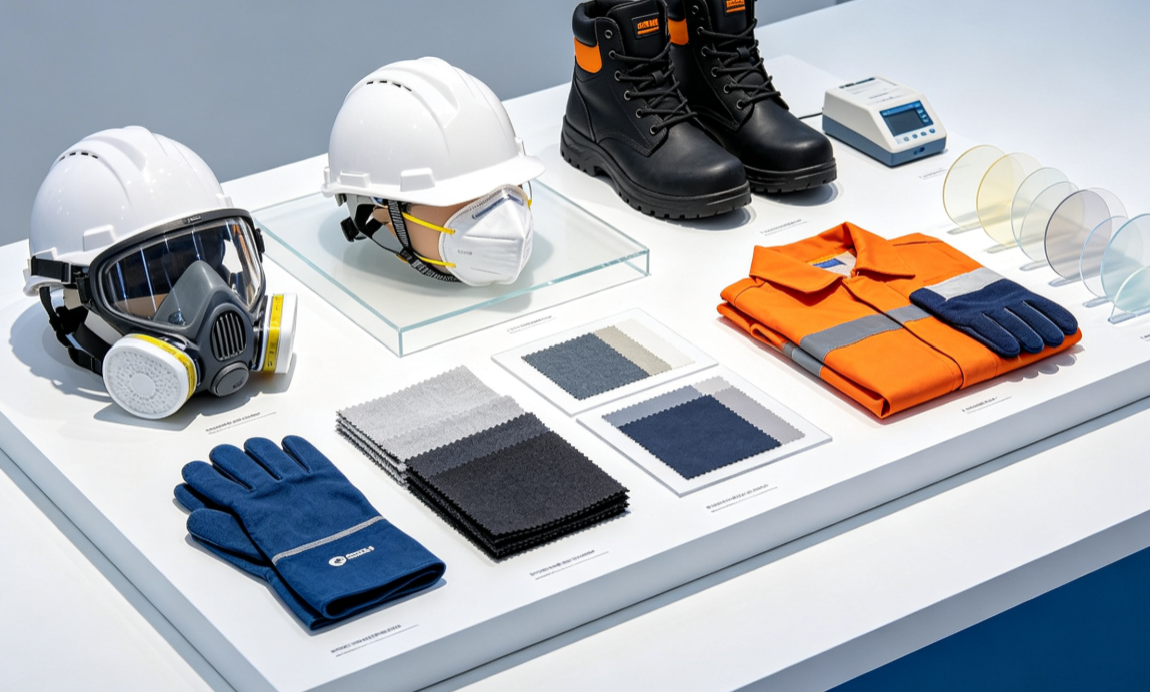
This marks the first time China has established a mandatory standard to uniformly regulate toxic and harmful substances in labor protection products. All types of protective equipment, including safety helmets and protective masks, now have unified safety standards, addressing the issue of protective products themselves carrying hidden health risks.
Personal protective equipment serves as the final barrier for workers' operational safety. Products such as helmets, masks, gloves, and flame-retardant workwear are prone to residual heavy metals, formaldehyde, carcinogenic dyes, and other harmful substances during production and storage, which can damage the human body upon long-term exposure. Previously, relevant control requirements were scattered across three voluntary standards, targeting flame-retardant clothing, escape masks, and protective footwear respectively, with narrow applicability and no mandatory binding force. The industry had long lacked unified regulation. The new national standard consolidates the old rules and upgrades them to mandatory provisions, filling the gap in industry supervision.
The standard is administered by the Ministry of Emergency Management and was jointly developed by multiple quality inspection institutions and well-known protective equipment enterprises. It covers eight categories of protective products, including head, respiratory, hand, and foot protection, and clearly regulates more than ten categories of harmful substances, including lead, cadmium, hexavalent chromium, formaldehyde, phthalates, and carcinogenic aromatic amines. Taking KN95 masks as an example, the lead content in skin-contact components must not exceed 1000 mg/kg; the total amount of phthalates in plastic and rubber components must be below 0.1%; and carcinogenic dyes are strictly prohibited in fabrics. The limits align with international standards, facilitating the export compliance of domestic protective products.
Compared with the old standards, the new regulations achieve three major upgrades: First, the nature of the standard has changed, upgrading from a voluntary recommended standard to a mandatory national standard with regulatory binding force, meaning non-compliant enterprises will face penalties. Second, the scope of application has been significantly broadened, expanding from three categories of products to eight categories of labor protection supplies, covering the vast majority of protective materials in factories. Third, the content is more comprehensive; rather than merely specifying testing methods, it clearly defines safety limits for various substances, providing clear criteria for production quality inspection and market supervision.
The new standard substantially raises the industry's compliance threshold, requiring adjustments from both upstream and downstream enterprises. Manufacturers need to establish hazardous substance control systems throughout the entire process of raw material procurement, production, and finished product testing. After replacing the three old standards, testing requirements have become more stringent. In addition to meeting national standards for filtration performance, reputable mask brands conduct hazardous substance testing on all raw materials to mitigate risks at the source. Procurement enterprises must ensure that protective equipment purchased on or after July 1 complies with this standard. When purchasing, they should request corresponding test reports from suppliers, and when selecting masks, prioritize products that indicate the applicable standards and have complete testing documentation.
Addressing public concerns about purchasing, the new regulations impose unified control over all types of protective masks. Whether it is a domestically produced mask meeting the GB2626 standard or an N95 mask, all must simultaneously meet the hazardous substance limit requirements of this standard. Dust-proof KN95 masks and gas masks are subject to the same material control standards; the only difference is that gas masks require compatible filter cartridges based on the toxic gases present in the work environment. When purchasing masks, consumers should focus on verifying material test reports to avoid health damage caused by the products themselves.
The implementation of GB 31420-2025 signifies that China's personal protection industry is shifting from focusing solely on protective performance to dual management of protective function and material safety. The new standard achieves the transformation from scattered regulations to unified mandatory constraints, representing a concrete practice of the Healthy China Strategy in the field of labor protection. Enterprises that proactively implement control requirements can not only comprehensively safeguard the health of frontline workers but also stabilize their own foundation for compliant operations, driving the labor protection industry toward high-quality, standardized development.
Source: https://m.sohu.com/a/1046112868_122857229/

