


Labor Protection Exhibition | Building Stronger Teams: Practical Mental Health Support on Modern Construction Sites
Construction work is physically demanding, highly time-sensitive, and often performed under intense pressure. Tight schedules, changing shifts, job uncertainty, weather conditions, and complex coordination between crews can place significant strain not only on the body, but also on mental wellbeing. As companies place greater emphasis on total workforce safety, mental health has become an increasingly important topic across the industry and at professional events such as the Labor Protection Exhibition.
When workers feel supported, job sites often experience stronger communication, fewer absences, better concentration, and safer decision-making. Mental wellbeing is no longer viewed as separate from productivity—it is now recognized as a core part of operational success.
For many construction companies, the most effective approach is not launching large or complicated programs immediately. Instead, successful mental health initiatives often begin with simple, practical actions that build trust over time. Workers have seen many workplace campaigns come and go, so visible and useful support creates stronger engagement than slogans alone.
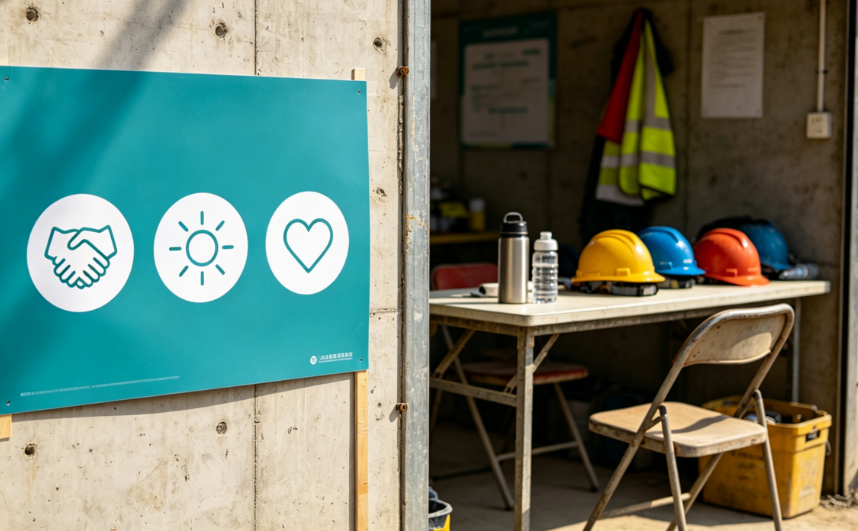
One of the easiest starting points is making resources easy to access. Clear posters in break rooms, site offices, and common areas can provide contact numbers, QR codes, or links to confidential support services. The language should be straightforward and relatable, focusing on real issues such as fatigue, stress, sleep problems, and workload pressure.
Short reminders during regular toolbox talks can also be highly effective. These do not need to be formal counseling sessions. A brief weekly message about managing pressure, recognizing burnout, or knowing where to seek help can normalize conversations around wellbeing and reduce stigma over time.
Supervisors play a particularly important role. Many frontline leaders want to help but may feel unsure about what to say or how to respond. Providing them with simple guidance—what warning signs to notice, how to start a conversation, and when to connect someone with professional support—can make a major difference.
Construction workers often respond best to practical leadership. When supervisors model calm communication, take fatigue seriously, and encourage respectful teamwork, crews are more likely to view mental wellbeing as part of everyday site culture.
Another valuable step is creating private feedback channels. Not everyone feels comfortable speaking openly in front of management or coworkers. Anonymous comment boxes, digital feedback forms, or confidential reporting systems can give workers a safe way to raise concerns before small issues become larger problems.
Long-term success also depends on recognizing how work patterns affect mental health. Extended overtime, rotating shifts, overnight schedules, and unpredictable workloads can gradually wear people down. Companies that treat fatigue management as a safety issue—not just a scheduling issue—are often better positioned to reduce stress-related mistakes and improve retention.
Many organizations are now integrating mental health into existing safety systems rather than treating it as a separate topic. This can include adding wellbeing checks during pre-task planning, discussing fatigue during hazard assessments, or reviewing whether stress contributed to incidents during post-event evaluations.
A simple question such as, “Is anything making it harder to focus this week?” can open valuable conversations. Over time, these small check-ins help create a culture where workers feel seen, respected, and more willing to seek support when needed.
Training programs are also becoming more common. Mental health awareness sessions for supervisors and crew leaders can help identify early warning signs such as rising absenteeism, conflict between teams, repeated mistakes, or sudden behavior changes. These signals may indicate stress levels that deserve attention.
Peer support models can be especially effective in construction environments. Workers are often more comfortable speaking with someone who understands the realities of the job. Trained volunteers or designated site champions can offer a listening ear and guide coworkers toward available resources.
For companies planning new initiatives, starting small is usually the smartest strategy. A focused pilot program over 30 to 60 days—such as weekly wellbeing reminders, supervisor training, and accessible support resources—can generate useful feedback before expanding sitewide.
Measurement also matters. Useful indicators may include attendance rates, turnover during high-pressure phases, conflict frequency, fatigue-related incidents, and employee feedback during safety reviews. These metrics help ensure programs stay practical and results-oriented.
Ultimately, mental health support on construction sites does not need to be complicated or highly visible—it needs to be real, consistent, and easy to use. Workers perform demanding tasks in environments where focus, teamwork, and resilience are essential every day.
By treating stress, fatigue, and emotional wellbeing as legitimate workplace safety concerns, construction companies can build stronger teams, improve retention, and create safer jobsites for everyone.
Source: https://underthehardhat.org/lifestyle-and-health/mental-health-initiatives-on-construction-sites/

