


China Personal Protective Equipment Expo | Optimizing PPE Management to Strengthen Occupational Health Protection in Factories
China Personal Protective Equipment Expo learned that a comprehensive factory EHS management system cannot rely solely on simple hazard inspections to complete occupational health protection work. The core approach is to build a layered, progressive safety protection mechanism. Engineering modifications, process controls, and other front-end measures can only reduce risks; they cannot completely eliminate various operational hazards in workshops.
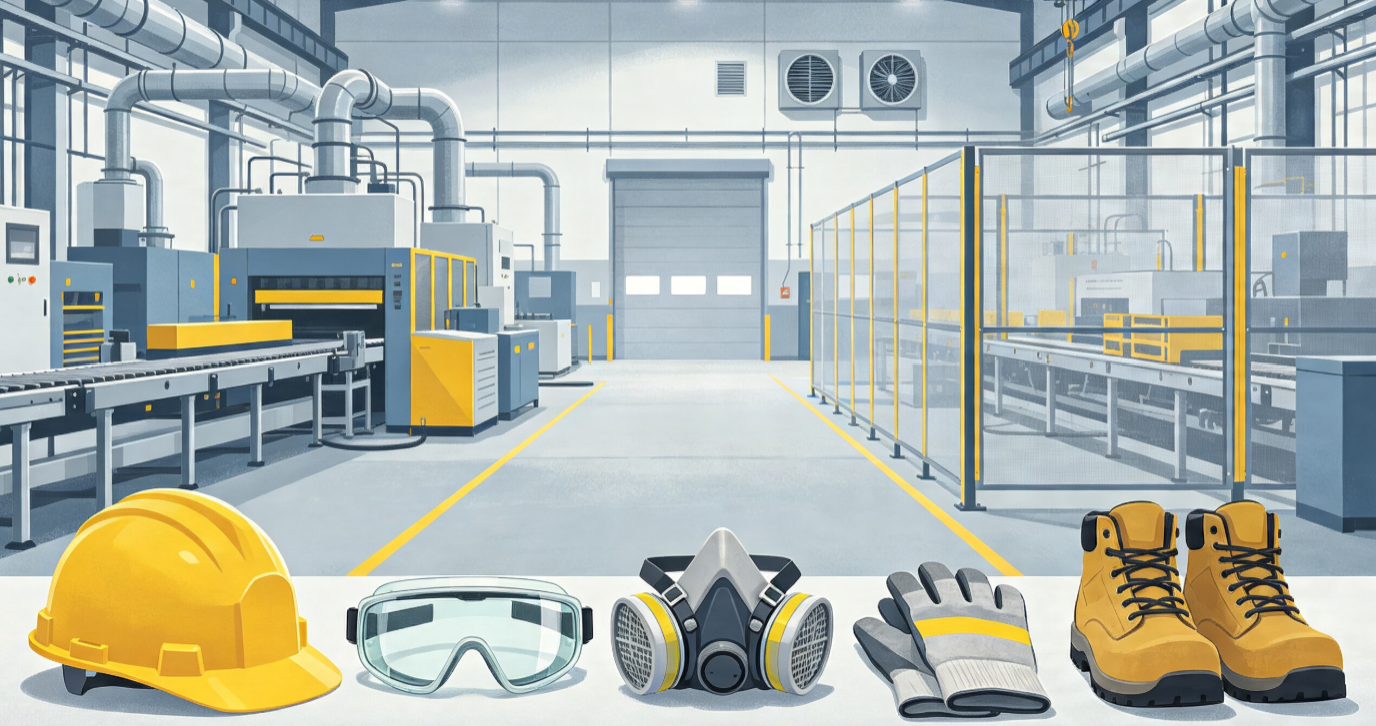
Under this premise, personal protective equipment (PPE) becomes the critical defense line for protecting employees' lives and health. As five categories of mandatory new standards for individual protective equipment are about to be implemented, manufacturing enterprises need to simultaneously adjust the full-chain management standards for PPE procurement, usage, and maintenance to avoid safety penalties and work injury risks arising from mismatched protective equipment selection and non-compliant usage at the source.
Many manufacturing enterprises have obvious shortcomings in on-site safety management, with rigid and simplistic management approaches. They overly rely on fixed protective facilities within the plant area while ignoring dynamic risks generated by different processes and temporary operations. This static management approach contains significant loopholes and is difficult to adapt to changing production conditions.
Even when workshops are fully equipped with various protective devices, problems such as mismatched protective equipment and on-site hazards, as well as incorrect wearing methods by employees, frequently occur. Over time, these issues can easily lead to various occupational injuries such as pneumoconiosis, noise-induced hearing loss, and chemical burns, severely affecting the occupational health of frontline workers.
To effectively manage occupational health, the primary step is to comprehensively identify various hazard factors in the workshop. Safety management personnel need to regularly conduct risk classification assessments at the production frontline, systematically reviewing multiple risk sources including noise, production dust, toxic volatile gases, and mechanical impact and collision.
Only by accurately identifying the types of hazards, employees' daily exposure duration, and the intensity of hazard exposure can enterprises customize protective solutions that match workshop conditions. At the same time, they must update the plant's protective material allocation list in accordance with the latest mandatory national standards to ensure all protective materials comply with current regulatory requirements, achieving compliant and refined management.
After identifying on-site risks, the selection of protective equipment must align with actual job hazards, achieving precise matching and demand-based allocation. For workstations with risks of flying workpieces or falling objects from heights, compliant safety helmets must be provided, relying on the product's cushioning structure to offset impact injuries and reduce severe head injuries.
In production areas generating dust or chemical volatiles, compatible respiratory protection masks must be provided to block harmful substances from entering the human respiratory tract. Workshops with long-term high-noise operations must mandatorily issue professional earplugs and noise-reducing earmuffs to prevent occupational hearing damage at the source. For positions involving chemical and reagent contact, dedicated chemical protective clothing and emergency eyewash equipment must also be provided to build a comprehensive personal protection system.
Purchasing compliant protective products is only the first step in protective management. Guiding employees to wear them correctly and replace them on schedule is equally indispensable. Enterprises need to establish standardized management processes to uniformly complete PPE application and distribution, on-site practical training, and mandatory replacement upon expiration.
At the same time, safety officers should be arranged to conduct daily patrol inspections to correct non-standard wearing behaviors, making standardized PPE wearing a spontaneous work habit for employees. Management personnel must also regularly verify product test reports provided by suppliers, confirm that materials comply with the latest national standards, and promptly clear inventory and discontinue all old protective products that do not meet the new standards.
Occupational health protection is not a short-term rectification task but a systematic project requiring long-term implementation. Only by deeply integrating on-site hazard inspection, precise selection of protective equipment, and daily on-site supervision and management can enterprises build a complete and reliable employee safety protection system, achieving both stable and safe enterprise operations and occupational health protection for frontline workers—these two core objectives.
Source: https://www.aegle.com.cn/news/news0135/

