


Labor Protection Exhibition | Breaking Free from Low-Price Internal Competition to Reshape the PPE Industry’s Competitive Landscape
The Labor Protection Exhibition understands that the current labor protection industry presents a distinct polarization.
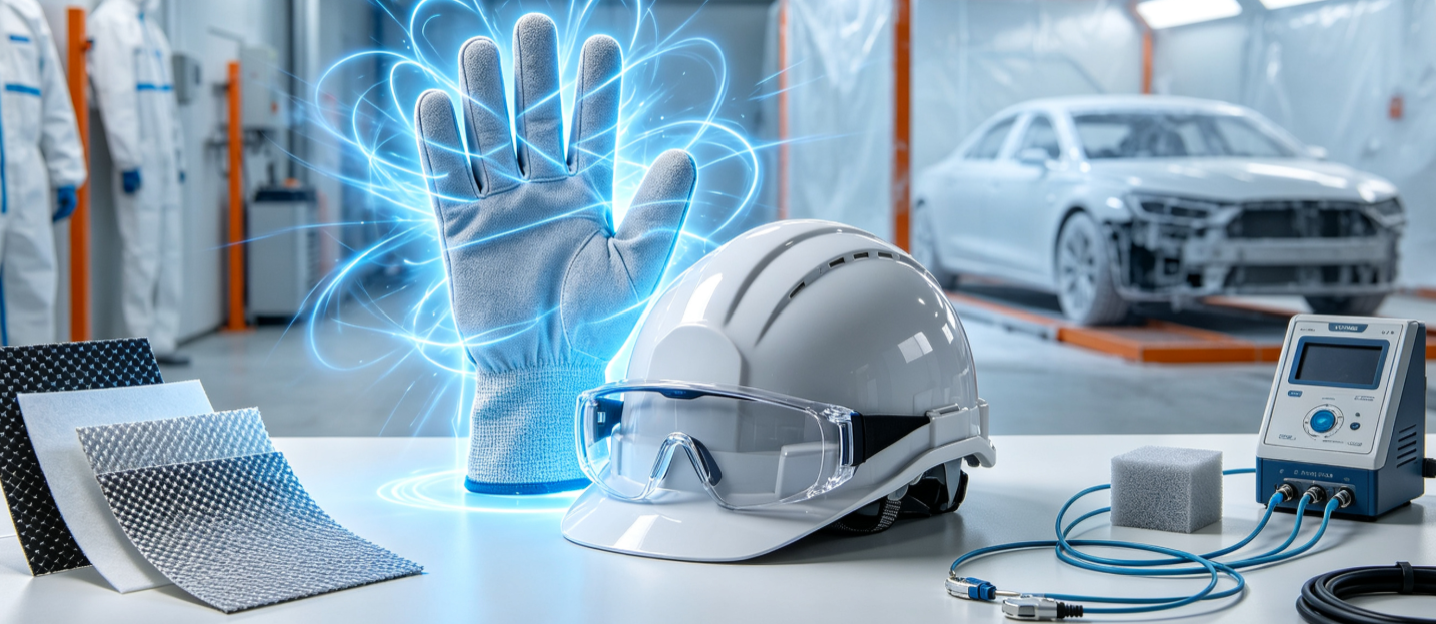
Manufacturers in the low-end market continue to engage in relentless low-price internal competition for minuscule price differences, while high-end manufacturing plants in the automotive, large aircraft, and lithium battery sectors demand extremely high precision and performance from protective equipment, tolerating no deviation whatsoever.
In 2026, domestic and international manufacturing standards have been comprehensively upgraded. The convergence of overseas green supply chain requirements, carbon tax barriers, and domestic lightweight production transformation has redefined the value of protective consumables. For similar labor protection products, the core of competition is no longer the ex-factory price, but the total lifecycle cost under actual on-site working conditions.
With the widespread adoption of automated production lines, operational standards in high-end workshops have significantly increased. Once protective equipment experiences material failure, it not only causes worker injuries but also easily triggers shutdowns of entire production lines.
Domestic supply chain controls are becoming increasingly refined, with even small PPE items such as anti-static gloves subject to strict quality inspections. Low-end factories using large quantities of inferior chemical raw materials face export obstacles, and small workshops relying on information asymmetry to move volume are seeing their survival space continuously shrink. Labor protection products are no longer ordinary consumables; they are the fundamental guarantee for stable production in high-end manufacturing.
Many protective gloves and safety shoes on the market share highly similar appearances and protection level markings, making it difficult to distinguish quality with the naked eye. Numerous manufacturers have fallen into the trap of homogeneous copying and low-price competition, compressing costs by using recycled materials and mistakenly treating low prices as their sole competitive advantage.
This model conceals enormous hidden costs. Saving merely two yuan per item can result in a direct 60% drop in durability under high-temperature and strong-corrosion environments. If consumables contaminate workpieces, enterprises will face fines of hundreds of thousands of yuan. Today, industrial purchasers no longer look solely at the unit purchase price; instead, they comprehensively calculate the total lifecycle cost. The stable long-term performance of a product is the key factor in procurement decisions.
The root cause of high-quality brands competing alongside low-price imitations for extended periods lies in the fact that most enterprises lack frontline working condition research and can only passively lower prices. Enterprises that have successfully broken through have long moved beyond the mindset of simply selling consumables, instead deeply cultivating customized protection solutions for niche scenarios.
Automotive painting workshops strictly control the resistivity of anti-static gloves to prevent electrostatic dust from damaging workpieces; aerospace composite material processing optimizes protective clothing for breathability and lightweight design to ensure workers' efficiency during long-duration operations. These niche scenario-specific indicators are not fully covered by general national standards. Enterprises that lay out ahead of time in the high-end track can build exclusive technical barriers and gain autonomous pricing power.
For enterprises to achieve long-term development, they must solidify three core competitive strengths. The first is rapid material adaptation capability—being able to flexibly adjust the raw material formulations of dust-free gloves according to the chemical reagents used in different semiconductor processes, thereby shortening custom R&D cycles. The second is green compliance capability: overseas markets strictly scrutinize raw material traceability and low-carbon indicators, and enterprises using bio-based biodegradable materials and holding carbon footprint certifications will seize a large share of foreign trade orders. The third is intelligent protection upgrade capability: leading enterprises are no longer limited to strengthening the basic protection of safety shoes, but are instead embedding sensor devices to monitor worker fatigue and fall risks in real time, integrating protective equipment into the industrial internet.
Abandoning flashy marketing, deeply cultivating application scenarios, strictly controlling all product performance parameters, and exchanging technical strength for bargaining space is the most steady path to escape homogeneous internal competition. The true gap between enterprises does not lie in the speed of replicating products, but in the comprehensive value of relying on professional protective products to help heavy industry enterprises avoid major losses such as production downtime and workpiece scrapping.
Source: https://mp.weixin.qq.com/s/ROfco971Jhy4hhtU9xF33Q?from=industrynews&color_scheme=light

