


CIOSH | Practical Guide to Proper Wearing of Employee Labor Protection Articles
In various industrial production and operation scenarios, correctly wearing labor protection articles is the first line of defense against safety risks and the protection of frontline workers' personal health. CIOSH centrally displays professional protective equipment and standardized application solutions for various scenarios, making job-site protection more scientific and standardized.
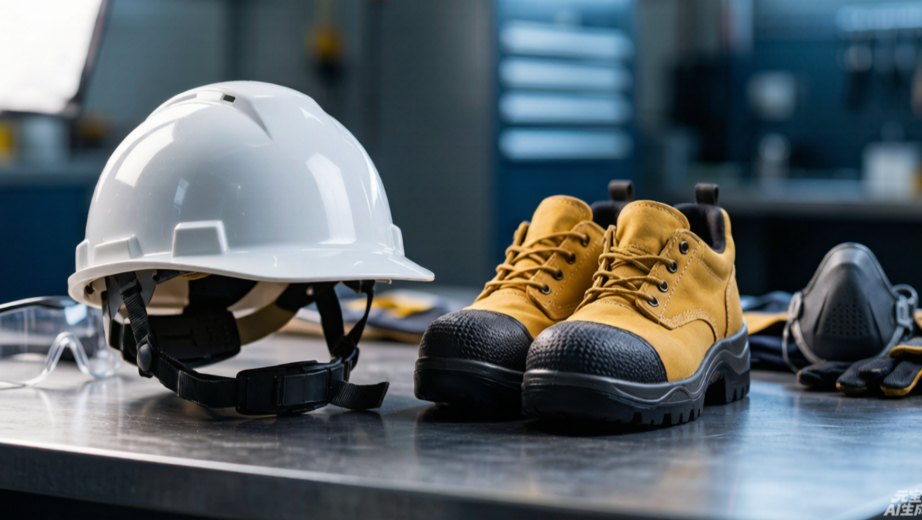
Different operating environments require different protective equipment, and only by strictly following the full-process standards for selection, inspection, wearing, and maintenance can the safety protection value of labor protection articles be maximized.
Eye Protection
Workers must select professional safety goggles based on job-site risks, ensuring wide field of vision, lightweight frames, and facial contour fit, so that the goggles do not slip or wobble during operations. Daily use should avoid lens scratches and impacts. Goggles with scratched lenses or deformed frames must be replaced promptly. Goggles should be dedicated to individual users to avoid cross-infection. Goggles should be handled with both hands when putting on or removing to prevent frame deformation, and properly stored when not in use. Protective filter lenses for special working conditions such as welding and laser operations wear out quickly and should be scrapped and replaced after intensive use to ensure eye safety.
Respiratory Protection in Dusty Environments
Dust masks and protective face shields must be properly worn in dusty operations. Such equipment is suitable for conventional dusty environments and cannot be used in oxygen-deficient enclosed spaces. When breathing resistance increases, filter cotton becomes clogged, or breathability decreases, filter materials must be replaced immediately or the entire face shield replaced. Using damaged equipment is strictly prohibited to effectively block dust inhalation and protect respiratory health.
Head Protection
Safety helmets are the core equipment for head protection. When in use, the internal lining spacing must be adjusted and the chin strap fastened to ensure stable and snug fit. It is strictly prohibited to wear additional hats inside the safety helmet to avoid weakening cushioning protection performance. Unauthorized drilling, painting, or applying thick stickers on the helmet is also prohibited, as these actions may conceal shell defects. Before each shift, thorough inspection is required. Safety helmets showing cracks, deformation, or impact damage must be immediately scrapped. Safety helmets have fixed service life limits, and prolonged sun exposure and corrosive environments will accelerate aging. Reverse wearing is strictly prohibited without special manufacturer authorization.
Hand Protection
Hand protection must be precisely selected according to needs. Grinding and cutting positions require cut-resistant gloves; chemical operations require acid and alkali resistant protective gloves; electricians must select insulating gloves matching the voltage rating; high and low temperature operations require dedicated cold-resistant and high-temperature resistant gloves. Gloves with damage, holes, or severe contamination must be replaced promptly. Reusable gloves should be cleaned, dried, and inspected for integrity before reuse. Special attention must be paid that wearing gloves is strictly prohibited when operating rotating equipment such as lathes and grinding machines to prevent mechanical entanglement accidents.
Foot Protection
Foot protection is equally critical. Positions with falling object risks require steel-toe anti-impact safety shoes; sites with sharp debris require puncture-resistant soles; electrical operations must use insulated protective shoes. During operations, shoelaces must be fastened and attire standardized. Slippers, high heels, and ordinary canvas shoes are strictly prohibited on the job. Regular daily inspection of uppers, soles, and insulation performance is required, and aged or damaged safety shoes must be replaced promptly.
Body Protection
Work uniforms, reflective vests, chemical protective suits, and other body protection equipment also have strict usage standards. Conventional work uniforms must have tight collars, cuffs, and hems to prevent loose clothing from being caught in equipment. Welding positions require flame-retardant workwear; night and outdoor operations must use high-visibility reflective vests; hazardous chemical operations require professional chemical protective suits; flammable and explosive areas strictly prohibit wearing synthetic fiber clothing to avoid static electricity hazards. For high-altitude operations at two meters or above, five-point full-body safety harnesses must be used, properly worn with correct anchor point fixation. Low attachment high use and knot tying are strictly prohibited. Safety harnesses that have experienced fall impact must be directly scrapped.
To systematically master the latest labor protection standards and equipment upgrade directions, enterprises can rely on CIOSH’s deep cultivation of industry frontiers to learn professional, scenario-based safety protection solutions. To standardize on-site operation management, enterprises must strictly enforce the ten prohibitions on labor protection wearing, strictly prohibiting the substitution of professional protective equipment with daily necessities, eliminating violations such as arbitrarily removing protective equipment during operations and using expired or damaged labor protection products, and comprehensively building a safety production protection barrier.
Source: https://mp.weixin.qq.com/s/79i4OzqiH62V_m7rZa0SBg

