


China Personal Protective Equipment Expo | Insights into PPE Industry Scale, Landscape, and Evolutionary Trends
Global personal protective equipment (PPE) provides comprehensive protection against physical, chemical, and biological occupational hazards across a wide spectrum of industries, including manufacturing, construction, and healthcare. The market is steadily ascending, with its overall development trajectory drawing close attention from China Personal Protective Equipment Expo.
Industry data indicates that the global PPE market is projected to reach $94.14 billion in 2026, with expectations to grow to $171.12 billion by 2035—representing a compound annual growth rate (CAGR) of 7.76% over the decade. From a regional distribution perspective, North America commands the largest market share, followed by Asia-Pacific and Europe, while the Middle East and Africa hold relatively smaller market portions. The competitive landscape is clearly delineated: leading enterprises dominate nearly half of the market share, with the remainder divided among small and medium-sized manufacturers across various regions.
The tightening of global workplace safety regulations and the sustained surge in healthcare sector protection demands serve as the primary engines propelling market expansion. Rising public awareness of safety protection, coupled with the practical application of new materials and intelligent technologies, is further accelerating product iteration and upgrades. Meanwhile, deepening environmental consciousness is driving growing demand for recyclable and biodegradable protective products. The continuous expansion of downstream industries such as construction and oil & gas also sustains equipment procurement demand.
The industry’s development faces notable headwinds. High-end protective products carry substantial price tags, creating considerable procurement pressure for small and medium-sized enterprises. Raw material price volatility undermines supply chain stability. The proliferation of counterfeit and substandard products disrupts normal market order. Inconsistent enforcement standards across regions, combined with suboptimal wearing experiences for certain products, collectively constrain industry progress to varying degrees.
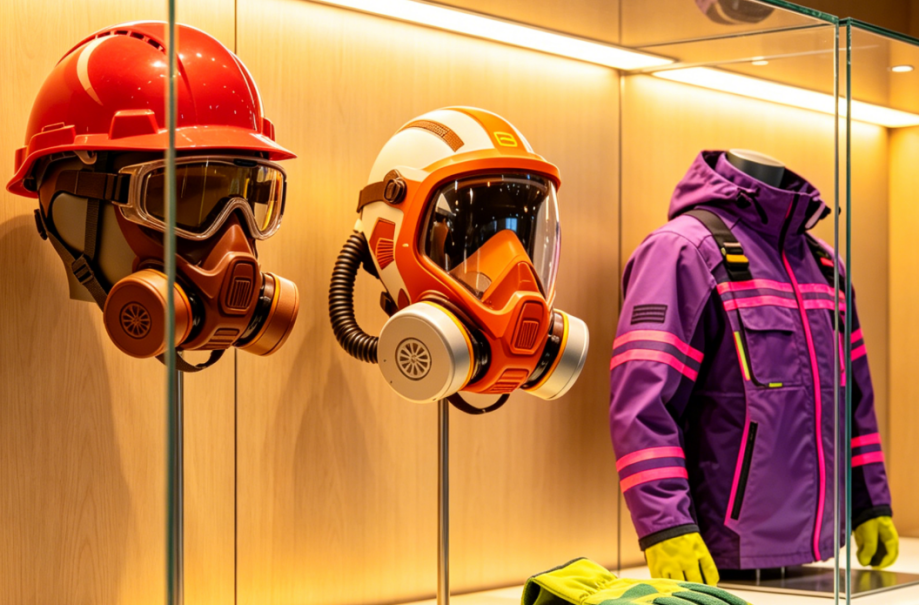
By product type, hand and foot protection categories command the strongest market demand, while protective clothing and head, eye, and face protection equipment also possess substantial market space. Respiratory protective equipment is predominantly deployed in medical and chemical scenarios, while fall protection gear for high-altitude operations sees frequent utilization in the construction sector—each product category tailored to specific operational contexts based on its characteristics.
PPE applications span multiple mainstream industries. Mechanical processing and chemical manufacturing demonstrate robust demand for protective gloves and protective suits. The construction sector prioritizes protection against fall from height risks, making head and foot protection indispensable. Oil and gas operations, with their complex environments, impose stringent requirements on comprehensive protective performance. Transportation, food, and medical industries emphasize collision prevention and infection control protective products.
Products are primarily distributed through two major channels: distribution networks and direct sales. Wholesale, retail, and e-commerce platforms offer broad coverage and represent the current mainstream sales models. Direct manufacturer supply can accommodate customization needs with more targeted service, though with limitations in market reach.
Distinctive features mark different regional markets. North America maintains rigorous safety control standards with leading adoption rates of advanced protective equipment. The European market prioritizes product quality and environmental attributes, with major regional economies driving steady industry development. The Asia-Pacific region serves as a critical production base, where ongoing industrialization fuels rapid market growth. The Middle East and Africa, leveraging oil & gas and infrastructure industries, continue to intensify protective equipment investment.
Intelligentization and green transformation have emerged as the industry’s mainstream development trajectories. Protective equipment integrated with sensing devices enables real-time monitoring of operational environments and personnel status. Multi-functional integrated products combining multiple protective capabilities better serve complex position requirements. Enterprises are increasingly prioritizing wearing comfort, with lightweight and human-centric design becoming R&D focal points, while automated production models are gradually gaining traction.
The current international market is populated by several deeply established leading corporations, while domestic manufacturers continue to grow and strengthen. The global PPE market is poised for stable growth going forward. Technological innovation, compliant production, and robust supply chain systems will constitute the critical levers for enterprises to enhance their market competitiveness.
Source: https://www.businessresearchinsights.com/zh/market-reports/personal-protective-equipment-ppe-market-119124

