


China Personal Protective Equipment Expo | Analyzing Market Landscape and Future Trends in the PPE Industry
Personal protective equipment (PPE) is capable of guarding against multiple occupational hazards, with a comprehensive range of protective categories widely applied across various production and operational scenarios. The industry is experiencing steady growth, with industrial clustering effects gradually becoming prominent—dynamics that have also drawn significant attention at China Personal Protective Equipment Expo.
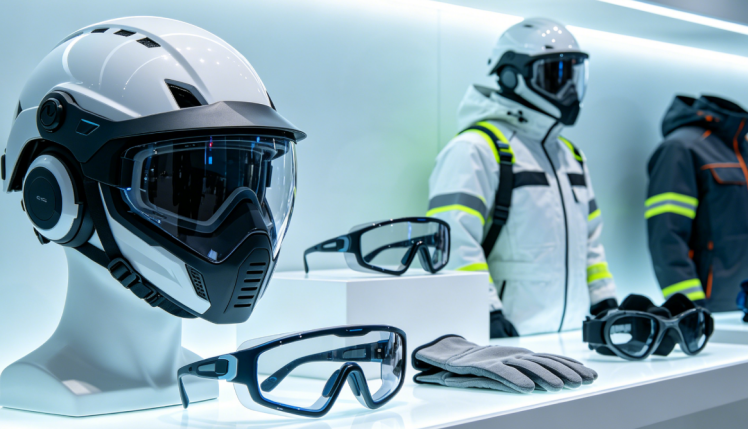
Domestic workplace safety regulations are becoming increasingly stringent, and enterprises are ramping up their procurement of protective equipment, propelling the PPE industry into a phase of quality improvement and capacity expansion. Today, product craftsmanship and technical standards continue to be refined, with numerous domestic brands successfully exporting overseas. Multiple regions have leveraged their industrial advantages to form specialized production clusters, driving continuous product innovation and upgrades. In 2025, the domestic PPE market reached a scale of 111.09 billion yuan.
The industry still faces developmental drawbacks. The market is crowded with an excessive number of enterprises, featuring a highly fragmented overall distribution and low industrial concentration. The majority of market participants are small in scale, failing to establish a mature and stable industry development framework.
Many small and medium-sized enterprises continue to rely on outdated, extensive production models, with some workshop-style operations struggling to ensure consistent quality. Enterprises fall short in management operations, quality control, and technology R&D, while homogenization among similar products is pronounced. The industry’s pace of development has failed to keep up with the growth of the domestic industrial economy.
As market openness continues to deepen, multiple internationally renowned PPE brands have entered the domestic market. Foreign-invested enterprises have captured mid-to-high-end market share through advanced technology and brand advantages, intensifying the overall competitive atmosphere within the industry.
In response to market shifts, the domestic industry has embarked on a path of resource integration. Various production and market resources are being reallocated and coordinated, with the industry moving toward large-scale and conglomerate-oriented transformation. Enterprises are continuously optimizing product quality, expanding sales channels, and actively building domestic brands to steadily enhance their market competitiveness.
Public safety awareness is continuously strengthening, and market consumption demands are evolving accordingly. PPE is no longer evaluated solely on basic protective capabilities—wearing comfort and aesthetic design have also become key purchasing considerations. Products that fit the body well, are lightweight, and practical are increasingly favored.
Multi-functional integration has become the mainstream development direction of the industry. Complex working conditions present multiple safety hazards, making single-function protective products inadequate to meet user needs. Protective equipment used in high-risk positions must integrate multiple performance attributes such as anti-crush, anti-static, and high-temperature resistance, balancing practicality with comfort. The R&D of composite protective products has become the critical direction for future innovation and development in the PPE industry.
Source: https://zjbhi.com/zh/cms/economy/5-c/4854-a.html

