


Labor protection equipment exhibition | Development of Professional Safety Eyewear Technology for 2026
The industrial safety sector has made upgrading industrial eye and face protection their main subject of discussion. The year 2026 will bring a transformation to professional safety eyewear because it will evolve from basic personal protective equipment into specialized safety gear which uses technological advancements and meets particular safety standards and adapts to different work situations. The growing complexity of industrial workspace which now include operations with heavy dust exposure and high salt content and strong welding brightness and machine work requires safety eyewear that goes beyond basic impact protection. The product develops through various technical aspects which include UV protection and anti-fog oil coating and acid and alkali resistance and salt spray corrosion resistance and ergonomic design to establish itself as an essential facility for worker eye protection which takes center stage at the Labor protection equipment exhibition.
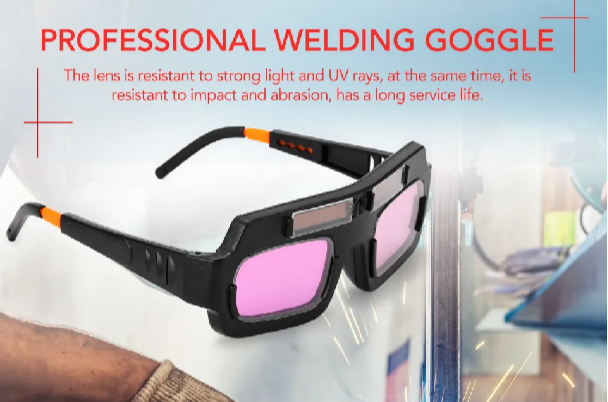
In recent years, the competitive advantage of professional safety eyewear has also moved from mere supply to providing technical solutions. Compared with traditional products, the next generation of products is thoroughly innovated in terms of material selection, craftsmanship, and protection mechanism. It usually uses strengthened PC lenses, permanent anti-fog oil coating, and cold-resistant and anti-corrosion frame materials. Based on the national compulsory standard GB 14866-2023, its design adopts proprietary patented technology for optimal protection effect. Not only does it resist mechanical splashes and dust invasion, but also meets specific working environments such as saline humidity environment and intense welding lighting. Moreover, from the perspective of structure design, it adopts light weight ergonomic principle and has adjustment anti-slip headband, detachable lens assembly, and washable body design to solve problems like excessive pressure during prolonged wearing, easy condensation, and corrosion.
In terms of quality assessment, the criteria considered in the evaluation of professional safety eye protection include technological innovations, product reliability, user reputation, and service support. The main technical standards subject to evaluation include resistance to scratches and fogs, thermal resistance and cold resistance of frame materials, and auto-dimming sensitivity. Specific working environment determines the requirements in terms of technical criteria. For example, dusty and humid working environment requires an anti-fog oil coating and acid and alkali resistant material; saltwater working environment requires corrosion resistance and cold resistance of frame; welding requires the application of photoelectric sensing auto-dimming technology at millisecond level; construction equipment requires resistance, drop resistance, wide style and easy to maintain. The basic requirement when buying eye protectors is that the enterprises just have to follow the criteria of meeting national standards and corresponding technical standards according to specific working environment.
Against the backdrop of increasingly standardized industrial safety management, advancing the upgrade of industrial eye and face protection requires serious attention to the technical selection and standard implementation of professional safety eyewear. Enterprises need only clarify their operational risks and technical needs first, verify the product’s legitimate testing and certification, conduct on-site tests of sample wearability and protective performance, and then finalize procurement and after-sales guarantee terms. By doing so, they can establish a comprehensive eye protection system.
In summary, the upgrade of industrial eye and face protection cannot be separated from technological iteration and scientific selection. Choosing compliant, adaptable, and high-performance professional safety eyewear is not only the foundation for protecting the eye health of frontline personnel but also a necessary measure for enterprises to improve industrial safety management and uphold the bottom line of safe production.
Source: https://www.sohu.com/a/1014503723_122561055

