


CIOSH | Robotic Descaling Technology Is Making Industrial Cleaning Safer
Industrial cleaning inside kilns, furnaces, boilers, tanks and other enclosed processing equipment has traditionally been one of the most demanding and hazardous maintenance tasks in heavy industry. Workers are often required to operate in environments involving confined spaces, residual heat, airborne dust, falling debris and high-pressure systems. Because of these risks, companies are increasingly seeking safer alternatives, and robotic cleaning solutions are attracting strong attention across the industrial sector as well as at professional events such as CIOSH.
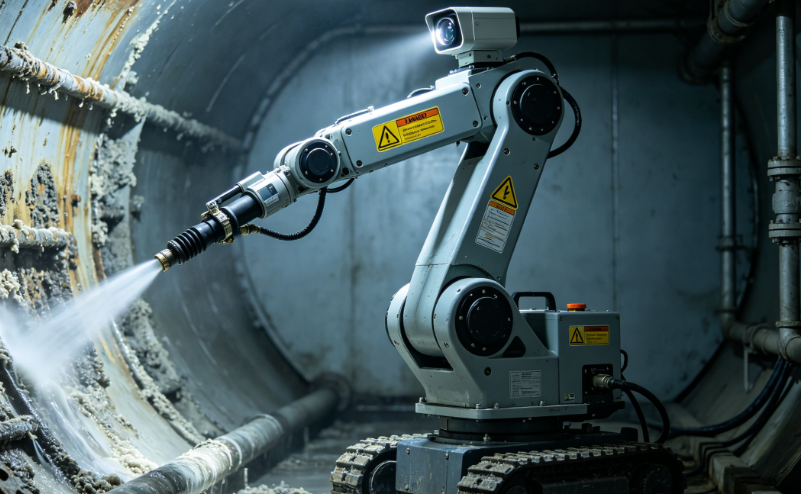
For many years, descaling work depended mainly on manual methods. Maintenance crews entered dangerous areas with handheld tools or water jet systems to remove hardened buildup, residue and scale that could affect equipment efficiency. Although effective in some situations, this approach often created unnecessary exposure for workers while also extending shutdown periods and increasing project uncertainty.
One of the main problems with traditional descaling is direct worker exposure to hazardous conditions. Personnel may need to work close to hot surfaces, unstable deposits, elevated structures or dust-heavy environments where visibility is reduced. In some facilities, temperatures remain high even after shutdown, making the task physically exhausting and potentially dangerous. Emergency access can also be more difficult when work takes place inside narrow or enclosed spaces.
Another challenge is the amount of downtime required. Conventional cleaning projects frequently involve scaffolding, confined-space preparation, permits and manual equipment setup before cleaning can even begin. These steps add time and cost to planned maintenance schedules. If cleaning results are incomplete, further delays may occur before production can restart.
Manual cleaning can also produce inconsistent outcomes. Performance often depends on operator stamina, access limitations and line-of-sight conditions. Areas that are difficult to reach may receive incomplete treatment, leading to rework or reduced process efficiency after restart. In addition, long hours using heavy vibrating tools can cause fatigue and physical strain, which may affect both safety and productivity.
Robotic descaling systems are changing this model by allowing dangerous cleaning work to be performed remotely. Instead of placing workers inside hazardous zones, operators can control specialized robotic units from a safer location outside the vessel or processing area. Many systems use high-pressure water jetting combined with articulated or telescopic arms that can reach difficult internal surfaces with greater precision.
This creates an immediate safety advantage. By removing workers from direct exposure, companies can significantly reduce risks associated with heat, falling material, dust inhalation and high-pressure cleaning operations. Remote operation also helps organizations strengthen compliance with modern occupational safety standards while creating a more controlled work environment.
Beyond safety, robotic descaling often improves efficiency. Because these systems usually require less scaffolding and fewer manual access preparations, shutdown periods can be shortened. Faster setup allows maintenance teams to begin work sooner, while consistent robotic performance can reduce missed spots and minimize the need for repeat cleaning. As a result, project schedules become more predictable and production can resume more quickly.
The benefits are especially meaningful for contractors and plant operators facing labor shortages. High-risk maintenance roles are becoming harder to fill in many markets, and safer working methods can make these positions more attractive. Reduced accident potential may also help lower insurance costs and improve long-term workforce retention.
Robotic descaling is part of a wider move toward remote-first industrial operations. Similar technologies are now being adopted in mining, cement production, demolition, utilities and heavy manufacturing, where companies want to automate hazardous tasks without compromising productivity.
As industrial facilities continue to modernize, robotic cleaning systems represent a practical balance between worker protection and operational performance. Solutions of this kind are becoming increasingly relevant to the future of workplace safety, which is why they are drawing growing interest at platforms such as CIOSH.
Source: https://underthehardhat.org/gear-equipment/robotic-descaling/

