


China Labor Protection Expo | Drones Are Reshaping Workplace Safety and Risk Control
For many years, safety management in industrial and construction environments has faced a difficult balance between obtaining accurate hazard information and keeping workers away from danger. Tasks such as inspections, site reviews, and hazard verification often required personnel to approach elevated, unstable, or high-risk areas. With the rapid development of unmanned aerial systems, this long-standing challenge is being addressed in a more efficient way. Drones are now becoming a practical tool for improving safety performance, a direction that is increasingly aligned with industry innovation trends highlighted at events like the China Labor Protection Expo.
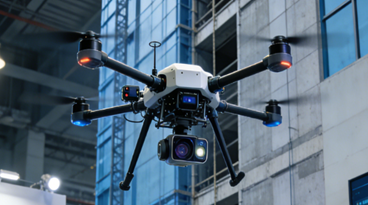
Rather than serving as simple imaging devices, drones are now widely recognized as part of a broader safety management toolkit. Their primary value lies in reducing worker exposure to high-risk environments while still enabling detailed observation and data collection. By shifting many “look and verify” tasks from people to machines, organizations can significantly lower the probability of incidents without compromising operational visibility. This shift reflects a growing emphasis on prevention, where minimizing exposure is considered just as important as controlling hazards.
One of the most immediate advantages of drone technology is its ability to reduce work at height. In traditional workflows, safety personnel often need to climb ladders, scaffolding, or elevated platforms to inspect conditions. With drones, these tasks can be completed remotely, allowing teams to observe guardrails, roof conditions, structural elements, and temporary installations without physically entering hazardous positions. This not only improves efficiency but also eliminates unnecessary exposure to fall risks.
Drones also play a key role in improving visibility across complex worksites. On large construction projects, ground-level observation can make it difficult to identify traffic conflicts, equipment interactions, or unsafe routing. Aerial perspectives provide a more comprehensive understanding of site conditions, enabling faster identification of potential hazards. This enhanced visibility supports better planning and allows adjustments to be made before risks escalate.
In excavation and structural work, where conditions can change rapidly due to environmental factors or operational sequencing, drones offer a reliable way to monitor developments without requiring close proximity. They can be used to assess excavation boundaries, track changes after weather events, and document structural conditions during demolition or modification phases. By keeping personnel at a safe distance, these applications contribute to more controlled and informed decision-making processes.
Beyond construction, drones are increasingly being adopted in general industrial environments. Facilities with large infrastructure, such as storage tanks, pipelines, and elevated systems, often require routine inspection. Traditionally, these tasks involve significant preparation and physical access, which can introduce additional risk. Drone-based inspections reduce the need for climbing or entering difficult-to-access areas, making routine monitoring safer and more efficient.
In confined or restricted spaces, drones provide another layer of support by offering visual insight before any human entry is considered. While they do not replace established safety procedures, they help teams better understand internal conditions and plan tasks more effectively. This reduces uncertainty and supports safer execution of high-risk operations.
Advanced drone systems equipped with sensors also contribute to early detection of abnormal conditions. Thermal imaging, for example, can identify overheating equipment, insulation issues, or leaks from a safe distance. Detecting such conditions early allows for preventive maintenance, reducing the likelihood of larger incidents and improving overall system reliability.
In emergency situations, drones offer valuable real-time perspectives that support faster and more informed response decisions. Whether assessing fire spread, identifying safe access routes, or evaluating damage after an incident, aerial data helps reduce unnecessary exposure during critical moments. This capability enhances coordination while maintaining a safer distance for response teams.
The true value of drone technology lies not only in data collection but in how that data is used. Organizations that achieve the greatest benefits typically integrate drone observations into daily planning, safety audits, and corrective action processes. Standardized inspection routines, clear follow-up mechanisms, and a focus on continuous improvement help transform raw data into meaningful safety outcomes.
As workplace safety continues to evolve, drones are becoming an increasingly important tool for reducing high-consequence risks and improving operational awareness. By enabling better visibility, faster response, and reduced exposure, they support a more proactive approach to safety management. This transition reflects a broader industry movement toward smarter, technology-driven solutions that prioritize both efficiency and protection.
Source: https://www.vanguardehs.com/articles/how-drones-reduce-risk-and-raise-standards-in-workplace-safety

