


Labor Protection Exhibition | Augmented Reality Advances PPE Management Efficiency in Industrial Settings
In high-risk sectors such as construction and industrial manufacturing, ensuring the proper allocation and use of personal protective equipment has long been a central concern for safety management. As digital transformation continues to reshape traditional industries, innovative technologies are increasingly being introduced to enhance efficiency and standardization.
Among these, augmented reality is emerging as a practical tool for bridging physical operations with digital systems, offering new possibilities for safety optimization and process control, a trend that is also gaining attention in professional platforms such as the Labor Protection Exhibition.
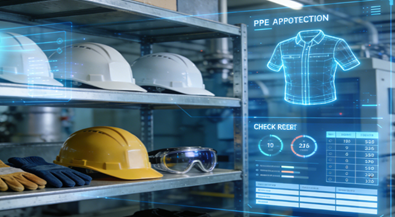
Recent industry developments indicate that augmented reality can be effectively integrated into the full workflow of PPE management, covering distribution, registration, verification, and on-site guidance within a unified system. Through mobile devices such as tablets or smartphones, workers interact with virtual instructions superimposed onto real-world environments. This allows them to identify required equipment more intuitively while following a structured selection process. By scanning QR codes attached to each piece of protective gear, the system automatically records distribution data, ensuring accuracy and reducing the likelihood of manual errors.
Such solutions also contribute to more precise control over PPE allocation. Equipment is linked directly to specific job roles, enabling the system to verify whether selected items meet task requirements in real time. This structured mechanism minimizes mismatches and supports consistent implementation of safety standards across different work scenarios. At the same time, supervisors can access centralized dashboards to monitor equipment distribution, review records, and ensure that procedures are followed in an organized manner. The result is a more transparent workflow that balances efficiency with accountability.
Another important aspect of this technological approach is the integration of just-in-time training. Instead of relying solely on pre-job instruction sessions, workers are given the option to access short, targeted guidance while selecting equipment.
These visual instructions are directly associated with each PPE item, helping reinforce correct usage in a practical context. By delivering information at the point of action, this method enhances comprehension while maintaining workflow continuity. The combination of real-time interaction and contextual learning creates a more engaging experience and supports improved retention of safety practices.
From a system design perspective, these applications are often supported by a multi-layered architecture that combines mobile computing, edge processing, and cloud-based data management. Edge nodes positioned on-site allow for rapid data handling and reduce latency, while cloud infrastructure ensures centralized storage and long-term accessibility of records. This structure not only improves operational efficiency but also provides scalability, enabling the system to adapt to different project sizes and industrial environments. In addition, it lays the foundation for future integration with smart PPE and sensor-based monitoring technologies, further enhancing safety management capabilities.
Practical evaluations suggest that such systems offer a high level of usability and user acceptance. Even individuals with limited prior exposure to augmented reality are able to navigate the interface and complete required tasks efficiently. The interaction process is generally perceived as intuitive, with low cognitive burden and clear operational logic. These findings indicate strong potential for broader adoption, particularly in environments where efficiency, accuracy, and compliance are essential.
As industries continue to explore digital solutions for safety management, augmented reality is gradually transitioning from a supplementary tool to a core component of operational workflows. By transforming traditional PPE distribution and tracking into a streamlined, data-driven process, this technology supports higher levels of consistency and traceability. At the same time, it aligns with the broader shift toward intelligent, connected systems that define modern industrial environments. With ongoing innovation and application expansion, augmented reality is expected to play an increasingly important role in shaping the future of workplace safety and equipment management.
Source:https://www.sciencedirect.com/science/article/pii/S0925753525003273#s0015

